

Article written on 23rd Sept 2026 by Melissa Nye (B. Pharm), Co-Founder and COO at Pet Chemist, AHPRA-registered pharmacist
Spring in Australia arrives with longer afternoons, a lawn that grows faster than you can cut it, and every wattle, tree and pasture grass in the neighbourhood releasing pollen at once.
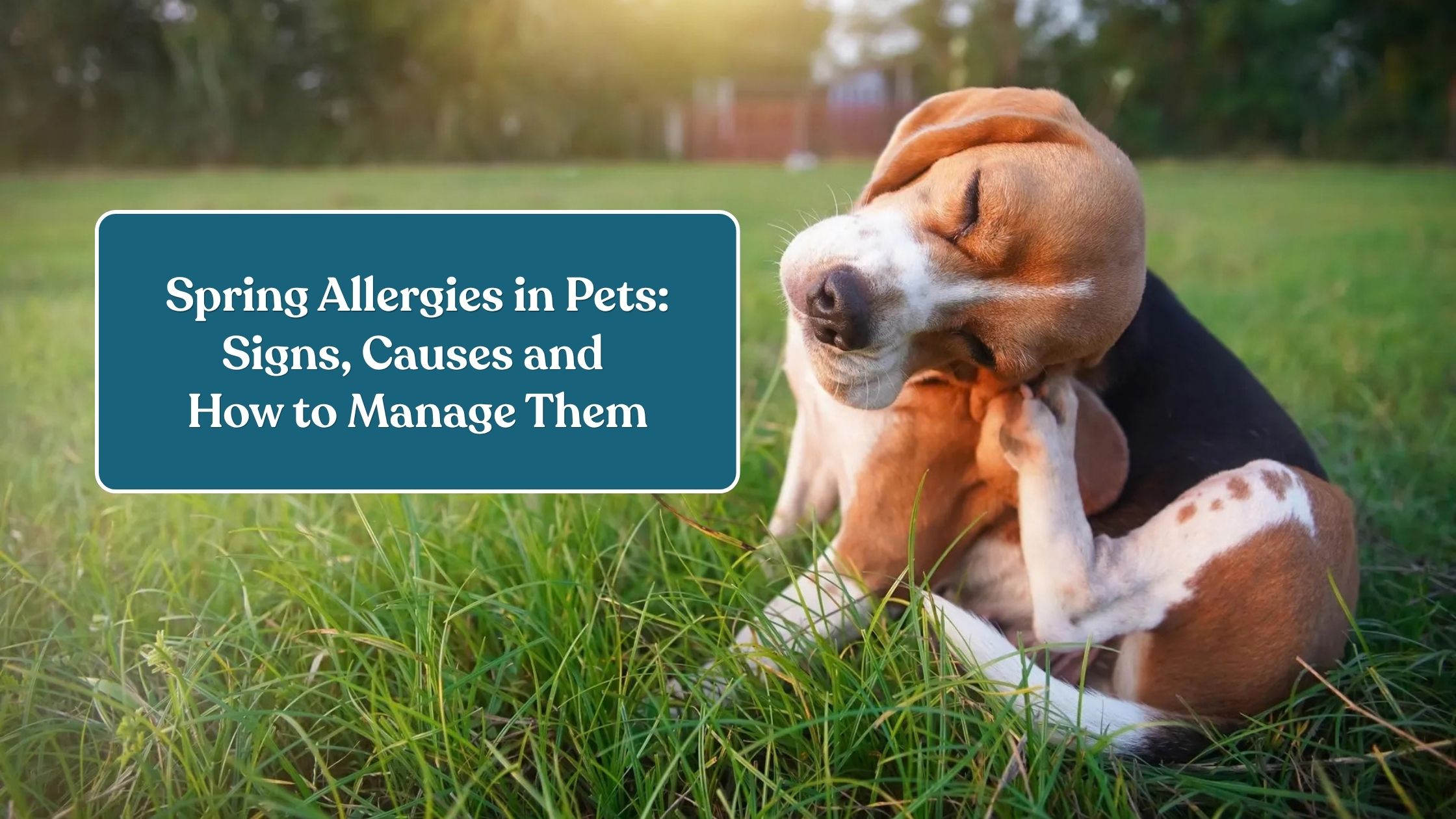
Your pet notices too, just not the way you might expect. Where we get the sneezing and itchy eyes, dogs, cats and horses tend to get it through the skin. A dog with spring allergies doesn’t reach for the tissues, they can chew their paws raw.
If your pet turns itchy at roughly the same time every year, that pattern is worth paying attention to. Here’s what’s behind it, what to look for, and what actually helps.
Why spring sets pets off
The most common culprit is atopic dermatitis, an allergic skin disease where the immune system overreacts to harmless things in the environment. Grass, tree and weed pollens, moulds and dust mites are the usual suspects, and in a dog or cat they’re absorbed through the skin as much as breathed in.
A few things make it worse here specifically:
Our pollen season is long. Depending on where you are, grass pollen can run from early spring right through to late summer, and in the subtropics, south-east Queensland and northern NSW, the seasons blur enough that some pets barely get a break. A “seasonal” allergy can look almost year-round on the Gold Coast.
Fleas come back at the same time. Warmer, more humid weather means flea populations surge just as pollen peaks. Flea allergy dermatitis, where a single bite triggers days of intense itching, is one of the most common skin conditions vets see — and it looks a lot like a pollen allergy from the outside. This is the single biggest reason spring itching gets misread.
Pets are outside more. More time on the grass means more contact with whatever is on it.
There’s also a genetic component. Atopic dermatitis tends to show up in certain breeds, such as Staffies, French Bulldogs, West Highland Whites, Labradors, Boxers and Shar Peis. It usually starts young, often between one and three years old.


The signs in dogs
Itching is the headline, but where your dog itches tells you a lot:
- Paws; licking, chewing, or reddish-brown saliva staining between the toes
- Face and muzzle; rubbing along the carpet or furniture
- Ears; head shaking, scratching, or recurrent ear infections that keep coming back after treatment
- Armpits, groin and belly; scratching, or skin that’s gone pink and looks inflamed
- Base of the tail; a classic flea allergy location
Beyond the scratching, watch for hair loss in patches, skin that’s thickened or darkened from chronic irritation, a greasy coat or a noticeable wet-dog smell, hot spots that appear overnight, and restlessness or broken sleep. Plenty of owners realise something’s wrong because of the licking noise at 2am rather than anything they’ve seen.

The signs in cats
Cats are much better at hiding it, and they often do their scratching where you can’t see. Look for:
- Overgrooming; especially a strip of thinning fur along the belly or inner thighs
- Small scabs around the head, neck and shoulders (miliary dermatitis)
- Bald patches from licking rather than from the hair falling out
- Hairballs more often than usual
- Ear scratching or head shaking
A cat that’s suddenly “very clean” is often a cat that’s itchy.

What to watch for, and when to see your vet
A little seasonal scratching isn’t an emergency. These are the signs that it’s moved beyond that and you should talk to your vet:
- Broken skin, open sores, or areas that are wet, weeping or smell unusual as these suggest a secondary bacterial or yeast infection has set in on top of the allergy.
- Ear infections that clear up and come straight back.
- Itching that’s disrupting sleep, yours or theirs.
- Rapid hair loss, or skin turning dark and leathery.
- Any swelling around the face, or difficulty breathing — that’s an emergency, not a spring allergy.
Your vet will typically start by ruling things out rather than jumping to an allergy diagnosis. That usually means skin scrapings and cytology to check for mites, bacteria and yeast, a thorough look at flea control, and sometimes a diet trial to separate food allergy from environmental allergy. Intradermal or serum allergy testing may follow if the picture points to atopy and your vet wants to identify specific triggers.
It’s worth knowing upfront: allergies aren’t cured, they’re managed. The goal is a comfortable animal, not a permanent fix — and the pets who do best are the ones whose owners started early in the season rather than in December.
How to manage spring allergies at home
Get flea control absolutely watertight first. Before anything else. Year-round, every animal in the house, no gaps between doses. If flea allergy is part of the picture, nothing else you do will work while bites keep happening.


Rinse the allergens off. A quick rinse or a wipe-down of paws and belly after walks removes pollen before it has hours to sit against the skin. It’s unglamorous but it genuinely helps.
Bathe with something soothing. A gentle, soap-free oatmeal shampoo can calm irritated skin and physically wash allergens away. Weekly is usually fine during peak season as more often than that risks stripping the natural oils that keep the skin barrier intact.
Support the skin barrier from the inside. Omega-3 and omega-6 fatty acids are well established for skin and coat quality, and they work slowly so starting before the season really bites gives them time to help.
Wash the bedding. Hot wash, weekly, through spring. Pollen and dust mites accumulate exactly where your pet sleeps.
Walk at the right time. Pollen counts tend to peak in the morning and on windy days. A late-afternoon walk is the kindest option for a sensitive dog.

Products that help at Pet Chemist
For everyday soothing, Aloveen™ Oatmeal Shampoo is the one most vets reach for as it contains colloidal oatmeal and aloe vera, is soap-free, and safe for dogs, cats, puppies and kittens of any age. Pair it with Aloveen™ Conditioner to hold moisture in the coat between baths.
If your vet has identified a secondary bacterial or yeast infection on top of the allergy, Malaseb® Medicated Shampoo is the standard treatment. The key with it is leaving it on for the full ten minutes and not trying to rush!


For skin barrier support, Dermoscent® Essential 6 is a spot-on available in both a dog and cat formulation. It is a unique blend of essential fatty acids and essential oils that reduces odour, moisturises dry skin and maintains coat and skin health.
Another great product is Antinol® Skin Topical Spray which is a product containing Totarol (an antioxidant used for healthy skin), Allantoin (to help soothe sensitive skin) and Ceramides (to strengthen the skins protective barrier).


Always consult your vet before starting any new medication or treatment, particularly if your vet has never seen the skin irritation before as there are so many things that can be misdiagnosed.
The short version
If your pet gets itchy every spring, it’s not bad luck and it’s not something they’ll grow out of — it’s a pattern, and patterns can be planned for. Tight flea control, a soothing bath routine, omega support started early, and a vet visit before the skin breaks will get most pets through the season comfortably.
Shop skin and coat care at petchemist.com.au. And if the itching is severe, keeping them up at night, or the skin is broken, book in with your vet — that’s where home care stops being enough.


ABOUT THE AUTHOR
Melissa Nye, B. Pharm
Co-Founder and COO at Pet Chemist, AHPRA-registered pharmacist
Melissa is a registered pharmacist and Co-Founder of Pet Chemist Online. Passionate about making pet healthcare easier to understand, she combines trusted veterinary and pharmaceutical knowledge with practical, everyday advice to help Australian pet owners keep their dogs and cats healthy and happy.
If you have any concerns about your pet’s health, or are starting a new treatment or care routine, always speak with your veterinarian.