


By Melissa Nye, B.Pharm | Pharmacist at Pet Chemist Online
Here’s a statistic that surprises most pet owners: by the age of three, approximately 80% of dogs and 70% of cats already have some form of dental disease. That’s not a problem that shows up later in life, it starts early, often silently, and progresses steadily without intervention.
The good news is that dental disease is largely preventable. The challenging part is that the best approach isn’t one-size-fits-all. Some pets will accept a toothbrush with minimal fuss. Others will treat it as torture. Most pet owners fall somewhere between diligent brushers and those who’d love an easier option but the reality is that the dental care world has expanded well beyond the toothbrush and offers many alternatives.
So: Toothbrush, Dental chews, or Both? Let’s break it down.
Why Pet Dental Care Matters
Plaque forms on teeth every day and hardens into tartar within 24–72 hours, making it almost impossible to remove by brushing or chewing alone; it requires a professional scale and clean under anaesthesia. Over time, tartar buildup leads to gingivitis (gum inflammation), periodontal disease (bone and tissue loss around the teeth), pain, tooth loss, and in severe cases the bacteria can spread to the heart, kidneys, and liver.
The goal of a home dental care routine is to disrupt plaque before it mineralises into tartar. That’s the window where both brushing and dental chews make their most meaningful difference.


The Gold Standard: Toothbrushing
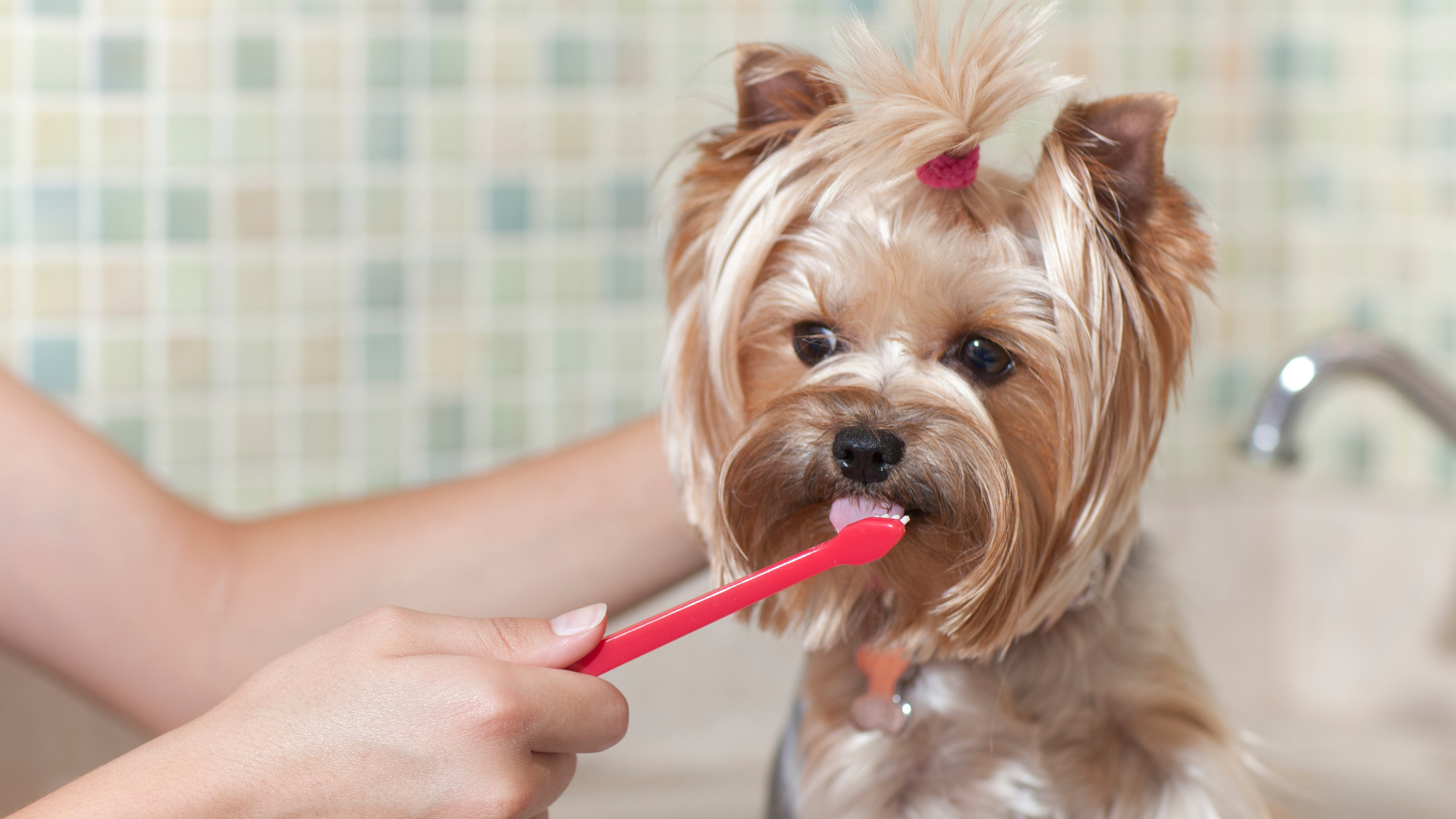
Just like your own dentist, any veterinarian will tell you the same thing — daily brushing with a pet-safe toothpaste is the single most effective at-home dental care intervention. Full stop.
When done correctly and consistently, brushing removes plaque mechanically from the tooth surface and just below the gumline, where periodontal disease begins. Nothing else replicates this action quite as thoroughly.

What you’ll need:
- A toothbrush designed for pets (angled, soft-bristled) or a finger brush for smaller dogs and cats
- A pet-safe toothpaste — never use human toothpaste, as it contains fluoride and other ingredients that are toxic to animals
The Petosan range at Pet Chemist offers a complete solution for getting started, including double-headed toothbrushes designed to clean multiple surfaces simultaneously, flavoured chicken toothpaste that pets actually enjoy, and starter kits for puppies and cats learning the routine for the first time.


The honest challenge of brushing: Many pets, particularly cats, will flatly refuse. And even cooperative pets require daily commitment. Life gets busy. Holidays happen. The most effective dental tool is useless if it stays in the drawer, which is exactly why dental chews and supplementary products have become quite popular.
Dental Chews and Treats: More Than Just a Reward
Modern dental chews have come a long way. The best of them are designed with particular shapes, textures, and formulations to maximise contact with the tooth surface and, in some cases, deliver active ingredients that inhibit plaque and tartar formation at the bacterial level.
They won’t replace brushing entirely, but for many pets and owners, they’re the realistic cornerstone of daily oral care. And for pets that won’t tolerate brushing at all, they’re invaluable.

For Dogs
OraVet Dental Hygiene Chews stand out in the dental chew category for one key reason: they’re the first and only dental chew for dogs to contain delmopinol, a clinically proven compound that forms a protective barrier on the tooth surface, preventing bacteria from adhering. This dual-action approach of physical scrubbing via the chewy texture plus active bacterial inhibition, makes OraVet particularly effective at addressing the root cause of plaque buildup rather than just its consequences. Available in sizes for small (4.5–11kg), medium (11–23kg), and large (23kg+) dogs, and recommended as a once-daily chew.
Bell & Bone Dental Sticks take an Australian-made, natural-ingredient approach. Grain-free and free of fillers and nasties, Bell & Bone Dental Sticks are vet-endorsed and come in a range of flavours and sizes tailored to dogs of all ages. Their signature Z-shape is specifically designed to reach from the front teeth to the back molars, ensuring broad coverage across the mouth. They also contain the prebiotic inulin, which addresses digestive causes of bad breath from the inside out — making them effective for freshness as well as plaque management. A great option for owners who want to know exactly what’s in their dog’s daily treat.
Greenies Dental Treats for Dogs carry the VOHC (Veterinary Oral Health Council) seal, which indicates clinically proven efficacy in reducing plaque and tartar. Greenies are biometrically designed so different sizes work specifically with the chewing mechanics of dogs of that weight range. They’re highly digestible, made from natural ingredients, and available in a wide range of sizes from Teenie (2–7kg) through to Large (22–45kg+). Greenies are one of the most widely recommended dental treats by veterinarians globally and are an easy daily addition to any dog’s routine.


Explore the full dog dental treat range at Pet Chemist.
For Cats it is a different challenge entirely!
Cats present a unique dental care challenge. They tend to be less amenable to brushing than dogs, they’re selective about textures and flavours, and they eat differently — quick, precise bites rather than extended chewing. This means cat-specific dental products are designed with all of that in mind.

Never give your cat dog dental chews — they’re too large, too hard, and not formulated for feline teeth.
Greenies Feline Dental Treats are the number one vet-recommended dental treat for cats. Available in chicken and tuna flavours, they feature a crunchy texture specifically calibrated for the bite force of cats, which works to scrub teeth and reduce tartar as cats eat. Formulated with natural ingredients plus vitamins and minerals, each treat is under 2 calories — making it easy to incorporate into daily feeding without impacting weight. Greenies Feline Dental Treats are nutritionally complete and balanced for adult cats, and they genuinely work: they’re designed to address the four areas vets check most — plaque, tartar, gums, and breath.
Bell & Bone Cat Dental Bites are the cat-specific counterpart to the popular dog dental sticks. Australian-made and grain-free, they’re available in tuna with spirulina, salmon, and chicken flavours which are protein sources that appeal strongly to feline palates. The texture is deliberately crumbly rather than chewy, because cats are crunch-chewers by nature. Bell & Bone Cat Dental Bites are formulated with natural oral active ingredients to support long-term dental health, and the smaller bite size is matched to how cats actually eat. For owners with notoriously fussy cats, the brand recommends introducing them by sprinkling on wet food or mixing through meals to build familiarity.


Explore the full cat dental treat range at Pet Chemist.
Beyond Brushing and Chews: Supplementary Options
For pets who resist both brushing and treats, there are several other helpful products:
PlaqueAway for Dogs & Cats is a seaweed-based daily supplement that’s simply sprinkled over food. The active compound in PlaqueAway (a specific strain of kelp) works systemically through saliva to reduce plaque and tartar formation. It’s one of the most effortless options available — no restraint, no treats, no special technique required. Particularly useful for older pets or those who’ve already developed some tartar buildup and benefit from a complementary approach alongside professional cleaning.
TropiClean Fresh Breath Dental Wipes offer a no-brushing alternative to mechanical plaque removal. Simply wrap around a finger and wipe along the tooth surface and gumline. Effective for pets who won’t accept a toothbrush but will tolerate gentle handling, or as an interim step while building up to full brushing.
TropiClean dental water additives and gels are added directly to your pet’s drinking water or applied to teeth and gums without brushing. While not as thorough as mechanical cleaning, they support a fresher mouth environment and are a good option for multi-pet households where a consistent treat-based routine is difficult to manage.


So is it Toothbrush, Chews, or Both?
If your pet will accept brushing: Brush daily if possible, and supplement with dental chews or treats. Even three to four brushing sessions per week, combined with a daily chew, produces meaningfully better results than either method alone. Think of chews as the daily maintenance and brushing as the deep clean.
If your pet refuses brushing: Don’t stress, focus on consistent daily chews or treats and consider adding a water additive or PlaqueAway. A daily dental chew that actually gets eaten is far more effective than a weekly battle with a toothbrush that ends in defeat.
If you’re starting with a puppy or kitten: Begin handling their mouth and teeth early. Use a finger cloth or small finger brush with pet toothpaste. Building the habit young — when they’re still getting used to being handled — makes a lifetime of dental care significantly easier.
If your pet is a senior: Dental disease is likely already present to some degree. The priority shifts to maintaining what’s there, supporting professional veterinary cleaning with consistent at-home care, and choosing softer options if tooth sensitivity is an issue. Speak with your vet about the right treatment.

The Bottom Line
The best dental care routine is the one you’ll actually do consistently. Brushing daily is ideal but a daily dental chew that your pet looks forward to is far more valuable than sporadic brushing they dread. Whatever you choose, consistency is the key to keeping plaque at bay, and a combination approach will always give you the best chance of keeping your pet’s mouth healthy between vet visits.

It is important to remember that a regular dental check with your veterinarian is essential to keeping your pets teeth and gums healthy.
Explore Pet Chemist’s full range of dental care products for dogs and cats and as always, chat with your vet about the right routine for your individual pet’s age, breed, and current dental health if you have any concerns.